



Does a pregnant cat give birth signs? What to look out for!

Blue-eyed cat lying in the cat bed


With us you will learn everything you need to know about the process of a cat birth and how to properly take care of the cat mother and her litter afterwards.

If you're expecting a litter of fluffy kittens from your cat soon, it can be very exciting – and maybe a little respectful. But don't worry: pregnant cats are usually quite good at taking care of themselves, even if they do need your care and attention during birth. Since cats often try to steal away at birth to enjoy some privacy, you should watch them closely during the last weeks of pregnancy to be on the safe side! Ask the veterinarian for advice if you have any questions about feline pregnancy or cat birth. He will surely be able to put you at ease.

Our PetCare team has put together a few helpful tips to help you prepare as well as possible when your cat becomes a mother.

Preparing for Cat Birth

During the last two weeks of pregnancy in cats, make sure that each member of the family behaves calmly and quietly around the cat and treats them with care – this is especially true for children, who are understandably excited and looking forward to the little kittens and new playmates!

Try to keep your cat as calm and still as possible during this time, and get them to rest a little in their own whelping bed prepared for them. But even the softest bed can be so cuddly - some cats don't deserve to look at the whelping bed and prefer the farthest corner of a closet instead! Just make sure your cat has a choice of where they give birth to their kittens and never try to move them away from their chosen spot. Here you can learn more about pregnancy and how you can prepare a suitable whelping bed for your cat.

Have help at hand

The birth of a cat should go smoothly, but it is still advisable to be helpful, reassuring and there for them should complications arise.

Ask the veterinarian before the cat is born at which number he can be reached outside of office hours, as kittens are often born at night. It is also possible that he will have to rush to help in an emergency. If your cat has problems giving birth, you may need to take them to the vet – so make sure you have a means of transport available if the worst comes to the worst.

How old do cats get?


On average, cats have a life expectancy of about 15 years. How old a cat can get depends on many different factors, such as its breed or the type of husbandry. Nutrition and general health also play a decisive role.
 
On the graphic you can see a young cat next to a slightly older cat.


A purely indoor cat usually lives longer than an outdoor cat. If you want to know how old cats get, you will probably also be interested in how to convert cat years into human years.

We will show you how to determine the age of your cat and provide you with important information about the average age of cats. We also give you tips on how to protect your cat in the best possible way in old age - regular check-ups with the vet are indispensable. While you take care of the well-being of your house cat, we can take away the financial worries of treatment with cat health insurance.

Life expectancy of cats – How old can cats really get?

 
This shows the different life expectancy of indoor cats and outdoor cats.


The oldest cat in the world to date was an incredible 38 years old. However, this is rather the exception. How old a cat gets depends on numerous factors. The individual hereditary disposition plays a decisive role in this.

In addition, when it comes to the question of life expectancy, a distinction must be made between outdoor cats and domestic cats. While indoor cats can even live to be over 15 years old, cats with free range have a significantly lower average life expectancy of 10 years. The average age of a cat that lives exclusively outdoors – i.e. a stray – is even lower. In addition, some pedigree cats can be burdened with hereditary diseases that can reduce life expectancy.

If you decide on a particular cat breed, make sure you have a responsible breeder.

Life expectancy of cats at a glance:

  • Domestic cats: 15 – 18 years
  • Outdoor cat: 8 – 12 years
  • Stray: 6 – 8 years
  • Purebred cats in general: 10 – 12 years


Which cat breed has the highest life expectancy?

Some cat breeds have a higher life expectancy than others. This is partly due to the fact that some breeds are more prone to certain diseases or carry hereditary diseases. The most popular breeds in Germany include Maine Coon cats, Bengal cats, Siamese cats, British shorthair cats and Ragdoll cats.

 
Some long-lived cat breeds with their average lifespan:
Balinese 18 to 22 years old
European Shorthair 15 to 22 years
Siam 15 to 20 years
Ragdoll 12 to 17 years old
Persian 10 to 17 years
Bengal 12 to 16 years
Maine Coon 12 to 15 years
British Shorthair 12 to 14 years


Why do domestic cats have a higher life expectancy than outdoor cats?

As a rule, domestic cats live longer than outdoor cats. This is mainly due to the fact that cats are exposed to several dangers outdoors. Many dangers lurk in road traffic. Disputes with conspecifics also threaten the outdoor cats. If cats come into contact with others, the risk of infection with cat diseases also increases.

Indoor cats are usually confronted with significantly fewer dangers. As a consequence, their life expectancy is significantly higher on average.


Easily convert cat years to human years

 
Pictured is an older cat next to a young human.


It is important to convert cat years into human years so that the cat owner can better adjust to the age of the cat. As the cat gets older, its behavior also changes. The animals often become sluggish – and the performance of their sensory organs becomes significantly weaker. To ensure that your four-legged friend is well cared for, you should know the needs of the old cat in particular and respond to them. To make sure that a change in behaviour is not a disease, you should first discuss the relevant symptoms with your veterinarian.

 
Here's how cat years are converted to human years:
Cat years Human years
1 year 15 years
2 years 21 years old
3 years 27 years
4 years 31 years
5 years 35 years
6 years 39 years
7 years 43 years
8 years 47 years
9 years 51 years
10 years 55 years


How to tell your cat's advancing age

Cats are referred to as seniors from the age of 11. Just like in humans, there are typical signs of a biological aging process.

Examples of typical signs of aging in cats are:

  • Reduction of muscle mass and muscle strength
  • Movement restrictions
  • Behavior
  • Waning of the senses
  • Memory performance is reduced
  • Greater need for sleep
  • Neglect of grooming

It is important to be able to distinguish typical signs of aging from feline diseases, such as cat flu. Regular veterinary checks are strongly recommended here. If your cat scratches frequently and it looks like it neglects to care for its fur, it may also be mites in the cat, for example.

Caring for cats in old age: How to increase the life expectancy of cats

 
It shows a cat with a veterinarian, grooming materials and age-appropriate nutrition.


As with humans, the susceptibility to diseases also increases in cats at an older age. Older cats, for example, no longer tolerate wet and cold so well and can get sick more quickly. In addition, as cats get older, their character can also change and decreasing physical activity can be observed.

For this reason, it is particularly important to be considerate of the cat. In order to support the velvet paws in old age in the best possible way, the following factors in particular should be taken into account:

  • Regular vet visits: As the cat gets older, it becomes more susceptible to diseases. In order to be able to treat diseases such as kidney disorders, tumors or heart disease in time, it is important to have the cat's health checked regularly by a veterinarian - not only in old age. Also remember to have your cat vaccinated regularly.
  • Prevent weight fluctuations: Due to increasing sluggishness, some cats often gain weight with age – others, on the other hand, suffer from a loss of appetite. As a cat owner, you should make sure that your cat eats enough and consumes all the nutrients it needs.
  • Make sure you get enough exercise: More physical activity also helps prevent weight fluctuations. In addition, your cat stays fit, which also reduces the risk of injury.
  • Support grooming: Cats are very clean animals that in most cases take care of their own grooming. With increasing age, the cat can find it increasingly difficult to clean its fur on its own due to reduced mobility. Support the cat in grooming. In this way, you can increase the well-being of your velvet paw. Cat's claws that are too long should also be cut.
  • Pay attention to an age-appropriate diet: With increasing age, the nutritional requirements of cats usually change. Therefore, you should take special care to adapt the food to the needs of your animal.


We answer more questions on the topic: How old do cats get?

How can you tell how old a cat is?


The exact age of a cat is not always known. In kittens, the age may still be recognizable by weight - but in older cats, determining the age is rather difficult. Clues such as the condition of the coat and a look at the face can give an initial clue.

However, this is very uncertain information and cannot be sure of the cat's lifespan so far.


Which cat breed has the highest life expectancy?


Balinese and European shorthair cats have a quite high life expectancy of up to 22 yearsSiamese and Savannah cats also have an increased average life expectancy of up to 20 years


What is the most common cause of death in cats?


The most common causes of death in cats over 5 years of age are kidney disease, closely followed by traffic accidents.

Cancer, tumor diseases, viral infections, complex respiratory diseases such as cat flu are also common in cats, often with fatal outcomes.


How old do cats get? Therefore, you should know the life expectancy of your feline paw

On average, cats live to be 10 to 15 years old. Exactly how old cats get depends on factors such as breed, husbandry and diet. Cats are already seniors from the age of 11. Older cats may require special care, and some may also rely on special food regimes.

With age, the probability of the occurrence of various clinical pictures also increases. It can be helpful to get a better sense of a cat's age by converting it into human years.

If you are considerate of the cat's age, you can increase the quality of life of your house cat enormously. A regular visit to the vet can also help to detect cat diseases more quickly and thus treat them at an early stage. If you have taken out cat health insurance with Helvetia, we will take care of the veterinary costs from now on, so that you can concentrate fully on the well-being of your four-legged friend.

Dangerous foods for cats

The zoologist and animal behavioural scientist Paul Leyhausen already found that cats do not necessarily only eat what is actually good for them. This makes it all the more important that the human roommate of the mini kitty is well informed about which of his foods can be harmful to cats. Some human foods that are beneficial to human health are highly toxic to cats.

The following list is not exhaustive.

What are cats not allowed to eat?

Dangerous foods for cats include:

  • Alcohol: It is actually obvious that cats should not be given alcohol. For this reason, Bach flowers for cats only available in a non-alcoholic version. Alcohol can lead to severe liver and brain damage in cats. Even an amount that seems very small from a human point of view, namely a tablespoon, is enough to put a cat into a coma. Just a little more alcohol can even be fatal for the cat.
  • Rollmop: Even if you might think that you are doing something particularly good for your cat by letting it participate in your rollmops, it is strongly discouraged. The high salt content is not good for the cat's digestive tract at all.
  • Chocolate: Just like for dogs, chocolate is also highly toxic to cats due to the ingredient theobromine. The substance is contained in every type of chocolate – but in particularly high concentrations in dark chocolate and pure cocoa, as it is used for baking or the production of "hot chocolate", among other things. When cats consume chocolate, it has fatal consequences. It leads to cardiac arrhythmias, muscle tremors and seizures. The higher the cocoa content of the chocolate, the more dangerous the chocolate is for our roommate cats. Fortunately, cats - unlike dogs - are often not so interested in the delicate temptation, but you should still make sure that your house cat does not have access to your chocolate because of the risk of poisoning.
  • Raw pork: There is a risk of infection with the Aujezky virus – which is often fatal. Aujeszky's disease or pseudo-rage manifests itself primarily through neurological symptoms of the cat. She becomes restless and restless, makes herself known by frequent meowing and loses a lot of saliva due to conspicuous swallowing movements. In the advanced phase, coordination disorders and paralysis occur.

For emergencies: Read more about the Signs of poisoning and first aid measures.

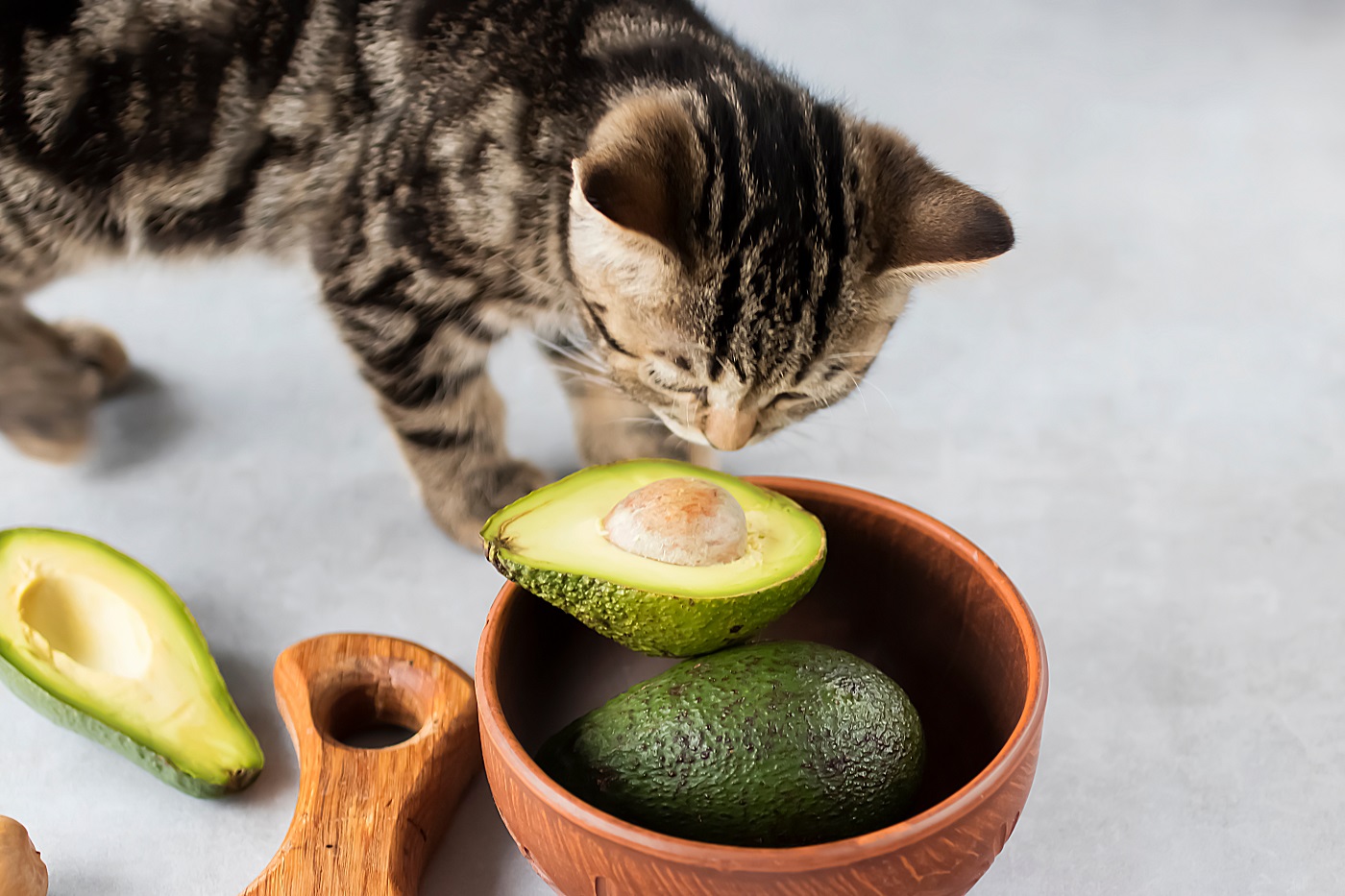
Cat avocado dangerous food© zhannaz / stock.adobe.com
Avocados: Superfood for us, taboo food for cats!
  • Avocados: Avocados are also dangerous foods for cats. Currently very hyped in human nutrition due to its health-promoting properties, avocados are harmful to cats. The persin contained in it leads to shortness of breath, oedema in cats and it damages the heart muscle.
  • Tomatoes and aubergines: The vegetables contain atropine, which triggers cardiac arrhythmias in cats.
  • Raw poultry meat: Even if cats love poultry meat, they should still not eat it under any circumstances. This is because consumption poses numerous dangers for our feline furry creatures - among other things, because it could contain salmonella.
  • Bone: These can contain splinters and thus injure the cat's palate, get stuck in the throat or damage the intestinal wall of the house cat.
  • Legumes and cabbage: Foods that are harmful to cats are also legumes and cabbage. They have the characteristic of being difficult to digest. For the cat, they can be downright indigestible and lead to flatulence or diarrhoea. In addition, isolated deaths are known.
  • Onions: Onions are very toxic to cats in any form – whether raw, cooked, dried or powdered. The reason for this is the sulfur compounds. These attack the cats' red blood cells. The consumption of onions in any form can therefore cause vomiting, diarrhea, mucous membrane irritation or even irritation in our beloved feline furry creatures. Anaemia (anemia). Even small amounts can be enough to change the cat's blood for the worse and endanger its health.
  • Leek: Leeks are also dangerous foods for cats. These include wild garlic and chives. However, chives in particular are often found in the garden, on the balcony and in the kitchen. If the cat eats it, it is threatened with symptoms of poisoning.
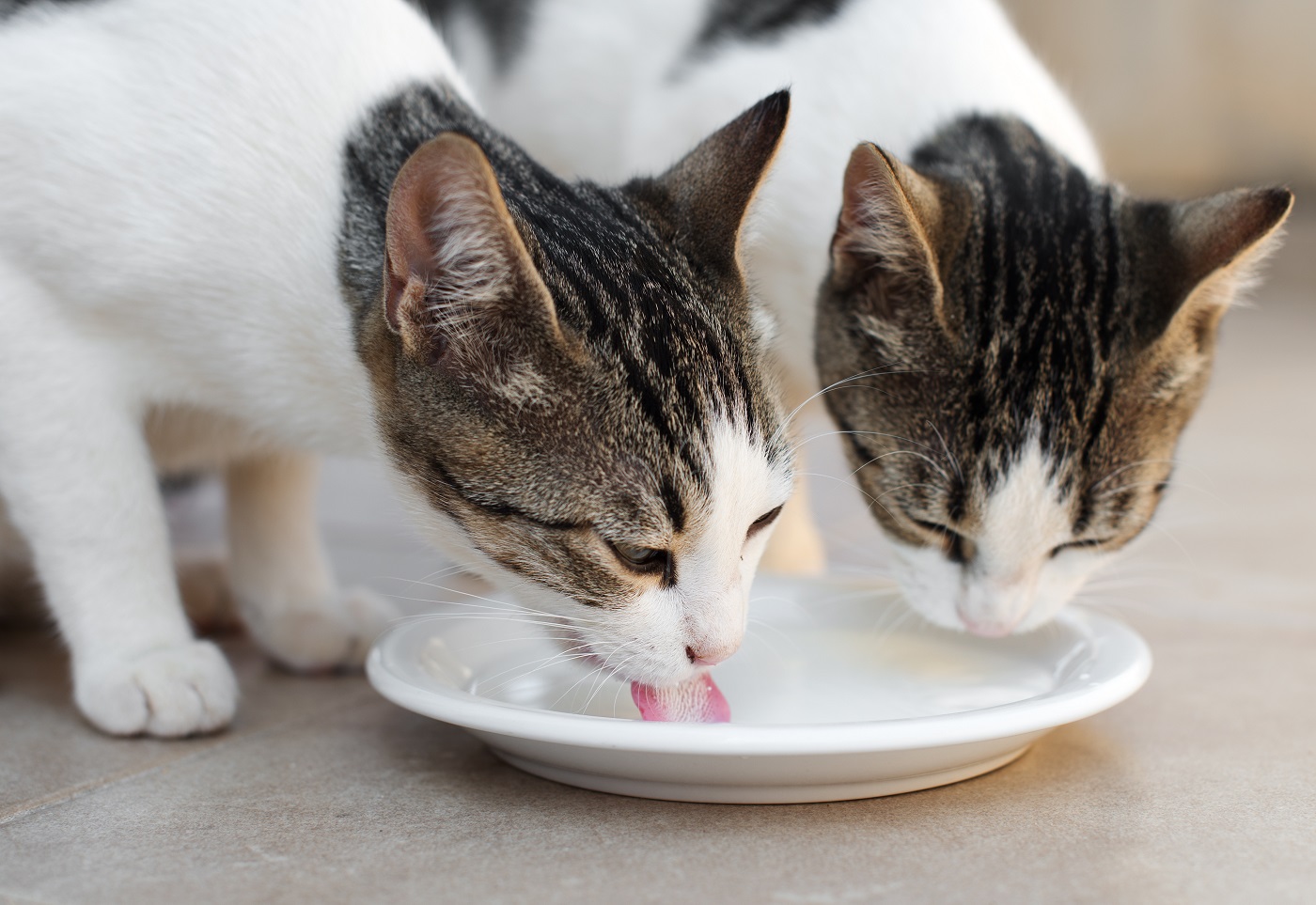
  • Milk: Because cats do not tolerate lactose by nature, they should no milk , even if it is often argued that cats on farms also drink milk regularly, (supposedly) without being harmed by it.

Discover our selection of special Cat milk with less lactose in the zooplus shop.

dangerous foods for cats© M-Production / stock.adobe.com
Many cats love milk – but they cannot tolerate the milk sugar (lactose) contained in cow's milk.

Not a food for cats, but still dangerous: slug pellets

Slug pellets are not schnapps for the snail, but a vermin killer, which is pressed into a grain shape and is used against slug infestation in the garden and house area. It is also known as molluscicide. Slug pellets can contain the stomach poison metaldehyde. So make sure that the cat food never comes into contact with slug pellets.

If your feline furry friend has symptoms such as Vomit, balance problems or very heavy salivation, you should immediately See a veterinarian. The doctor can then initiate a suitable treatment as quickly as possible to save the cat.

By the way, for children and mammals, the consumption of the chemical club can have a fatal effect! Garden owners with children or pets should therefore not use slug pellets under any circumstances! This also applies if the neighbors have cats that could come into contact with the slug pellet. Find out about environmentally and animal-friendly alternatives! Children, cats and the environment will thank you.

What cats can and can't eat: an overview


The fundamental question: What food does the cat need?

If you were to make a list for the question "What are cats allowed to eat?", meat would of course come first. A cat's natural food spectrum consists almost entirely of animal food, which it preys on when hunting small mammals, birds and fish as well as small amphibians and reptiles (such as lizards), depending on availability. By the way, a cat that hunts its own food also consumes a little plant matter (via the stomach contents of the prey).

To care for a domestic cat, provide the animal with high-quality cat food in which ingredients including trace elements and supplements are optimally tailored to the needs of the animal. Detailed information about wet fooddry food and snacks awaits you when you read our guides.

Away from cat food: What can cats eat?

In addition to cat food, which would in principle be sufficient as a complete food, there are a number of foods that cats are allowed to eat.

Tastes are different depending on the cat's personality:

  • Fresh meat (except pork), cooked or fried without spices
  • Fish (remove bones, never raw freshwater fish)
  • Vegetables, boiled or steamed (see below for exceptions)
  • Fruit such as melon, apple slice or berries (see below for exceptions)
  • Dairy products such as quark, yoghurt (unsweetened) or hard cheese (no milk!)
  • Egg, boiled or as unseasoned scrambled eggs (never raw!)

This list is not to be understood as a feeding instruction, but as an overview of what can be used to enrich a cat's diet - if it likes the respective taste at all. The foods mentioned are not indispensable for a balanced diet - apart from meat. However, lactose-free dairy products such as a spoonful of natural quark can serve as a valuable source of protein.

There is also talk of mini portions and unseasoned and unsweetened dishes. However, you don't have to be too worried if the tiger steals a small portion of prepared vegetables from your lunch from your plate once – it's more important that the cat doesn't eat anything that harms it.

"Unhealthy" from the human table: The cat doesn't get that

Many foods that are part of the normal diet of a "can opener" are harmful to the cat. So what are cats not allowed to eat? The following list lists foods that the cat should keep its paws off of.

Even small portions can lead to serious health damage.

  • Rollmops: It is fish, but indigestible due to the high salt content.
  • Avocados: The fruit contains persin, which can cause shortness of breath, oedema and heart muscle damage.
  • Tomatoes, aubergines, raw potatoes: The nightshade family contains both atropine, which can cause cardiac arrhythmias, and solanine, which triggers cramps and breathing disorders in cats.
  • Legumes and cabbage: Cats can get painful flatulence from this, although the danger comes primarily from raw materials.
  • Onions, leeks, garlic: The spicy vegetable plants contain sulphur compounds that are toxic to cats. To be on the safe side, cat owners should avoid chives as a kitchen herb in flower pots.
  • Baked goods of all kinds: Cereal products are not part of a cat's food spectrum; many animals are sensitive to gluten.
  • Sausage, smoked or marinated meat: Too much salt and spices are also added to such meat preparations.
  • Pork: Cats can become infected with the so-called Aujeszky virus, especially through raw pork. This can result in inflammation of the brain and spinal cord.
  • Milk: Adult cats cannot metabolize lactose. There is a risk of diarrhea and painful abdominal cramps.

The problem with these foods is that the fishy and meaty products are quite desirable for cats and the danger of fruit and vegetable products - precisely because they are part of the healthy diet for humans - is underestimated.

However, here, too, it is the quantity that makes the difference: If the cat has caught a tiny bite once when it has tried the "human food" out of curiosity, there is usually no immediate risk. However, if the animal has eaten several times or questionable amounts of the taboo foods, you should seek the advice of a veterinarian.

Katzen fressen Trockenfutter

Thorsten Nilson/500px Plus via Getty Images

A case for the veterinarian: What is poisonous for cats?

A frequently asked question is: Can cats eat chocolate? No, chocolate is highly indigestible for cats. The candy and also related products such as cocoa contain the substance theobromine, which can trigger cardiac arrhythmias, muscle tremors and cramps even in small doses. Since cats may not perceive the taste "sweet", but are quite interested in fat, you should never leave chocolate products unattended.

Raisins and grapes or their ingredient oxalic acid continue to pose a particular danger. Even in small doses, this can lead to kidney failure.

Human beverages such as alcohol (ethanol – leads to severe liver damage) and tea or coffee (caffeine, theine, theophylline – toxic even in small quantities) are harmful to cats. Of course, no cat owner would probably fill his furry friend's bowl with coffee or beer; on the other hand, it is conceivable that a cat bites a brandy or espresso praline out of curiosity.

Immediate veterinary help is finally necessary if the cat has ingested medication or pesticides such as slug pellets as an outdoor cat due to any circumstances: Different variants of the product are also toxic to cats.

Whether outdoor cat or sofa lion: Last but not least, it becomes risky when the cat chews on certain indoor or garden plants. It is therefore advisable to make the parlour and garden cat-proof from a botanical point of view.